



What Is Casa Amor? The Complete Love Island Guide to TV’s Most Brutal Twist
What Is Casa Amor? If you have spent any time watching Love Island, scrolling through fan forums, or following the show’s social media chaos in real time, you have probably seen one phrase pop up again and again: Casa Amor. It is whispered with dread by some fans, celebrated with glee by others, and almost always followed by an explosion of group chat messages the moment it airs. But if you are new to the show, or you just want a clear, no-fluff explanation, you are likely asking yourself the same question millions of viewers have asked before you. What is casa amor, really, and why does it matter so much?
In the simplest terms, this twist is a structured relationship test built into the format of Love Island. It separates couples, introduces a wave of new singles, and forces every Islander to make a choice that reveals exactly how strong, or how fragile, their connection really is. It sounds simple on paper, but in execution it is one of the most emotionally charged, talked-about segments in modern reality television. This guide breaks down everything you need to know, from the origins of the twist to how the recoupling actually works, what makes it so addictive to watch, and why it continues to define entire seasons of the show.
By the end of this article, you will not just understand the concept on a surface level. You will understand why it works as television, why producers keep bringing it back season after season, and why it consistently produces some of the most quoted, most replayed, most argued-about moments in the show’s history. We will also cover the history of the twist, how it differs between the UK and US versions, what happens to the new arrivals who do not get chosen, and the lasting cultural footprint this single format decision has left on reality television as a whole.
What Is Casa Amor in Simple Terms
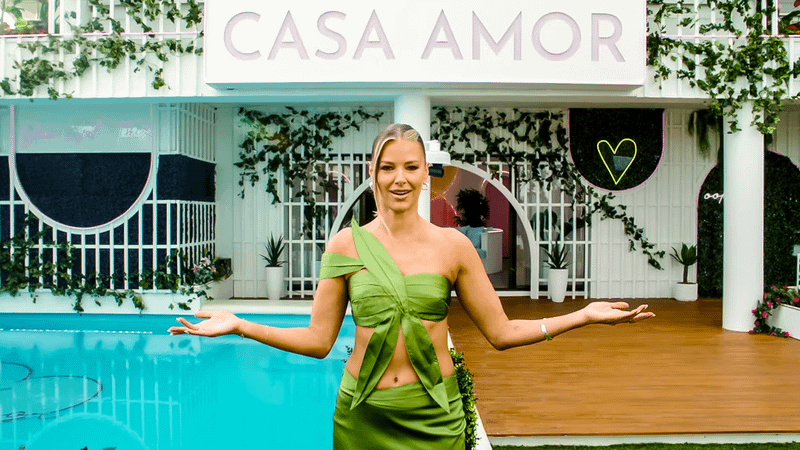
At its core, casa amor is a second villa. The name itself translates from Spanish to “Love House,” which is a fitting, if slightly ironic, label for a twist that has broken up far more couples than it has strengthened over the years. When this twist activates, the original cast of Islanders is split by gender. One group, often the boys, is told they are leaving the main villa for what sounds like an exciting day trip, only to discover they are being relocated to a brand-new villa for several days. The other group stays behind in the main villa, where they are soon joined by a fresh wave of attractive new singles eager to make an impression on the people left behind.
This separation is the heart of the entire concept: a deliberate, calculated removal of a partner’s physical presence. Without their other half watching, each Islander is left to navigate flirtation, temptation, and uncertainty completely on their own, with no way of knowing how their partner is behaving at the same time. The genius of the format lies in its simplicity. There are no complicated rules, no convoluted scoring systems, and no need for lengthy explanations before the audience can follow along. It is simply this: separate the couples, introduce temptation on both sides, and watch what unfolds over the following days. That simplicity is exactly why the twist has become one of the most enduring and recognizable segments in the entire franchise, instantly understood by new viewers within a single episode.
It also helps that the stakes feel immediate rather than abstract. Viewers are not asked to imagine a hypothetical scenario; they watch real people making real choices under conditions designed specifically to expose the truth about their feelings. That immediacy is part of why the twist translates so well across cultures and international versions of the show, since the underlying premise of testing loyalty through separation and temptation does not require much cultural translation at all. It is a near-universal anxiety dressed up as reality television entertainment, and that universality is precisely why audiences everywhere respond to it the same way: with anticipation, anxiety, and an inability to look away.
The Origins of the Twist and How It Began
This now-famous twist was not part of the original Love Island format when the rebooted UK version launched in 2015. It made its debut later, during the third series of the UK show in 2017, when producers introduced a second villa specifically to manufacture a new kind of dramatic tension that the existing format had not yet explored. The villa itself was located not far from the main villa, and the announcement that a second location would be introduced was made public just days before the twist actually aired, building real anticipation among fans who had never experienced anything like it on the show before.
That first version of the twist set the template that every subsequent season would follow, with some variation in details depending on production decisions made each year. The new Islanders introduced for that inaugural version of the format included five girls and six boys, all entering the two separate villas at the same time to test the existing couples left behind. The response from both viewers and contestants was immediate and intense. The drama that unfolded, the tears, the wandering eyes, the shocking recoupling choices, proved that this twist had real staying power and was not just a one-season experiment that producers would quietly drop the following year.
From that point forward, the format became a fixture rather than a novelty. It has appeared in nearly every series since its debut, including the US adaptation, the All Stars spinoff, and international versions of the format broadcast around the world. Each version has added its own small tweaks, whether in cast size, gender arrangement, or duration, but the underlying premise has remained remarkably consistent. That consistency is part of why longtime fans can jump between different international versions of the show and immediately recognize what is happening the moment the segment begins, even without a single word of explanation from the host or narrator.
How the Twist Actually Works Step by Step
Understanding the mechanics of casa amor love island is essential if you want to follow along with the drama as it happens in real time rather than relying solely on recap articles after the fact. The process generally unfolds over several distinct phases, each building tension toward the final, dramatic recoupling that caps off the entire segment. It typically begins with a misdirection. Producers tell one group of Islanders, usually framed as a fun outing or a surprise challenge, that they are leaving the villa temporarily. Only after they arrive at the new location do they learn the truth: they will be staying separated from their partners for multiple days while a group of new singles joins them in their temporary home.
Once the split happens, the format follows a fairly consistent rhythm season after season. Two batches of new Islanders, often five or six per villa, enter either location to meet the existing cast. The twist generally lasts between three and four days before a special recoupling ceremony takes place to resolve the tension that has been building. During this window, both villas are essentially running in parallel storylines. The original Islanders left in the main villa are introduced to new bombshells hoping to make a lasting impression, while the group relocated to the second villa meets their own set of new arrivals at the same time. Each side experiences flirtation, group challenges, and the slow, mounting pressure of not knowing what their partner is doing back at the other location.
Over these days, the two villas typically compete in lighthearted challenges against each other while simultaneously getting to know the new arrivals on a more personal level. These competitions often serve a dual purpose: they generate entertaining television moments while also forcing Islanders to interact closely with the new singles in ways that feel organic rather than forced. By the time the recoupling ceremony arrives, every Islander has had ample opportunity to either deepen their original bond from a distance through reflection, or develop genuine feelings for someone new through proximity and shared experience. That accumulated tension is exactly what makes the eventual reveal land with such emotional weight for both the Islanders involved and the audience watching at home.
The Famous Recoupling Ceremony Explained
The recoupling ceremony is the emotional climax of the entire segment, and it is built around a deceptively simple choice that nonetheless carries enormous weight. Each Islander is told they have two options: stick with their original partner or twist and couple up with one of the new Islanders they just spent several days getting to know in close quarters. The catch, and the reason this moment generates so much tension among both contestants and viewers, is that neither partner knows what the other has decided until the ceremony actually happens in front of everyone.
The outcomes branch in a few different directions depending on what each half of the couple ultimately chooses to do. If both Islanders choose to stick, they are reunited and remain a couple, often with visible relief and emotional reunions captured on camera. If both choose to twist, the two new couples remain in the villa, while their former partners are left to process the split in real time. But the most heartbreaking and frequently discussed scenario happens when the choices do not match. If one Islander decides to stick while the other chooses to twist, the new couple remains in the villa together, and the Islander who chose to stick also remains in the villa, but now single and without the partner they had hoped to be reunited with.
This single rule has produced some of the most viral, most emotionally devastating moments in the show’s entire history, because it means loyalty is not always rewarded with reciprocity. One person can be completely faithful throughout the entire separation and still end up alone, simply because their partner made a different choice on the other side of the island while they had no way of communicating or coordinating beforehand. It is a uniquely cruel structural quirk of the format, and it is also precisely why audiences find the recoupling ceremony so compelling to watch unfold live, episode after episode, season after season.
Why This Twist Is So Popular With Fans
There is a reason this segment consistently trends on social media the moment it begins each season, regardless of which version of the show is airing it. It takes the show’s central premise, finding genuine connection under public scrutiny, and adds a pressure test that strips away performance almost entirely. Up until this point in the season, Islanders have largely been playing a version of themselves that accounts for cameras, audience perception, and the watchful eyes of their partner standing nearby. Removing that check entirely, at least from one side of the equation, lets viewers see how people behave when they believe no one who matters is directly watching them in the moment.
This format also taps into something deeply relatable for audiences, even those who have never set foot anywhere near a reality TV villa themselves. Most people have, at some point, wondered how a partner would behave without them around, or questioned the strength of a relationship built quickly under unusual or accelerated circumstances. The twist turns that universal anxiety into entertainment, and it does so with real stakes, since the outcome directly affects whether a couple stays together on the show or gets dramatically separated in front of millions of viewers.
The unpredictability is part of the appeal too, and it is worth dwelling on because it is so central to the format’s lasting popularity. Even loyal, clearly compatible couples have fallen apart during this stretch of the season, while shaky pairings have occasionally been strengthened by the distance and forced reflection. Nobody, including longtime fans who have watched every single season, can predict the outcome with full confidence, and that uncertainty is exactly what keeps people watching live rather than waiting to read a recap the next morning. The format essentially manufactures a genuine cliffhanger using nothing more than human psychology, distance, and time, which is a remarkably efficient way to generate sustained audience engagement across an entire week of programming.
Casa Amor in Love Island USA
While the original UK format laid the groundwork for everything that followed, the US version of the show has put its own spin on the twist nearly every season it has aired since its debut. In the American version, after the men and women are split up, six new guys and six new ladies typically head to the two villas to attempt to break relationships up, turn heads, and try to secure a full-time spot on the show through their own performance. The American format has occasionally experimented with the numbers and overall structure, showing that producers are willing to adjust the twist to keep it feeling fresh for returning viewers who already know the basic premise inside and out.
Season eight of Love Island USA brought a particularly memorable version of the format that fans are still discussing. In that season, the boys were the ones sent away from the main villa, while the girls stayed behind to hold down the villa entirely on their own for the first stretch of the separation. Six new women entered the second villa and quickly sparked connections with the relocated men, while the women left behind in the main villa eventually realized they could hear the other group nearby and began shouting back at them across the distance, a moment that quickly became one of the season’s most replayed clips online.
That same season also pushed the format into genuinely new territory by extending the cultural moment beyond the screen entirely. Love Island USA made its big screen debut with a limited theatrical screening event built specifically around this pivotal episode, allowing fans to experience the villa’s biggest shake-up together in select theaters across the country rather than only at home. The fact that a streaming platform would build an entire theatrical event around a single twist says everything about how central this segment has become to the show’s identity, its marketing strategy, and its broader cultural relevance heading into each new season.
The Emotional Stakes Behind the Twist
What separates this format from a typical reality TV plot device is the genuine emotional weight it carries for the people experiencing it firsthand. These are not actors following a script written weeks in advance. They are real people who have spent weeks building intimacy, trust, and routine with another person, often under intensely public and unusual conditions that most relationships never have to endure. Suddenly removing one half of that equation and introducing a wave of attractive alternatives creates a scenario that closely mirrors real-world anxieties about commitment, temptation, and trust, just compressed into a matter of days instead of months or years.
For the Islanders going through it in real time, the experience is described by many former contestants in post-show interviews as one of the most stressful parts of their entire time on the show, often surpassing even the public vote pressure or the final stretch of the season. They are isolated from their partner, surrounded by new people actively trying to win their attention through flirtation and shared experiences, and fully aware that millions of viewers will eventually watch every decision they make played back in edited form. The twist is branded by the show itself as the biggest test of the season, since some Islanders can resist temptation while others struggle to handle the pressure because they do not know what their partner is doing at the other villa during the same stretch of time.
That uncertainty is not a minor detail tucked into the format. It is the entire engine driving the entire segment, and it explains why so many Islanders break down emotionally on camera, second-guess their choices in front of producers and cast mates, or make decisions during this stretch that they later regret once cameras stop rolling and they have time to reflect away from the pressure of the villa. The psychological toll is real, even if the format itself is entertainment, and that tension between genuine human stress and produced spectacle is part of what makes the segment endlessly discussed long after each season wraps.
Memorable Moments Through the Years
This twist has produced an enormous archive of iconic television moments since its debut, many of which still circulate online years after they originally aired on television. Certain seasons are remembered almost entirely because of how their version of the segment played out, with couples who seemed unbreakable suddenly falling apart, or underdog Islanders finding unexpected success once the pressure of the original villa dynamic was temporarily removed from the equation.
One of the clearest examples of this lasting impact comes from the very first season to introduce the format. Kem Cetinay and Amber Davies, the original test subjects of the very first version of this twist, had an instant spark as a couple but also experienced toxic moments along the way, and their connection nearly did not survive once new arrivals entered the picture and tested their bond directly. Years later, other seasons would prove that outcomes from this format could go in unexpected, even uplifting directions rather than ending in heartbreak every single time.
Kai Fagan, an original contestant from a more recent series, and Sanam Harrinanan, one of the new arrivals who joined partway through that same season, made history as the first couple formed through this twist to actually go on and win the entire series outright. These contrasting stories, one nearly ending a strong couple and one creating a winning couple from scratch out of a brand-new connection, illustrate exactly why audiences keep tuning in season after season without fail. The format genuinely does not favor a predictable outcome in either direction, and that unpredictability is precisely what makes it must-watch television year after year, regardless of how many times viewers have already seen the basic structure play out before.
How This Twist Differs From Other Love Island Format Elements
Love Island has introduced plenty of twists over the years, from public votes to surprise dumpings to single Islanders stealing someone else’s partner for a date night. But this particular segment stands apart from nearly all of them because of its scale, its duration, and its emotional finality once the recoupling concludes. Most twists last for a single episode or a short challenge before resolving and moving on to the next storyline. This format, by contrast, can stretch across multiple days and several full episodes, giving it room to build slow-burning tension rather than delivering a quick shock and immediately moving forward.
The table below breaks down how this twist compares to some of the show’s other well-known format elements, helping clarify exactly what makes this particular stretch of the season so structurally distinct from everything else viewers encounter throughout a typical run of episodes.
| Twist | Typical Duration | Core Mechanic | Emotional Impact | Outcome Type |
|---|---|---|---|---|
| Casa Amor | 3 to 4 days | Couples physically separated, new singles introduced to both villas | Very high, tests loyalty under prolonged uncertainty | Couples either reunite, split, or one Islander is left single |
| Bombshell Entry | Single episode | One or more new singles join the main villa only | Moderate, creates short-term jealousy or new connections | Existing couples may shift, but no forced separation occurs |
| Public Vote Dumping | Single episode | Viewers vote for their least favorite couple or Islander | High for those at risk, but resolved quickly | One Islander or couple is removed from the villa |
| Singled-Out Date | Single episode | One Islander is taken on a date with someone outside their couple | Moderate, sparks short-term tension between partners | Usually resolved by the next episode without long-term separation |
| Movie Night or Heart Rate Challenge | Single episode | Islanders confront secrets, clips, or hidden feelings revealed through games | High but emotionally contained to one event | Reveals information rather than physically separating couples |
As the comparison makes clear, this format is unique because it combines physical separation, extended time, and irreversible consequences all in a single connected sequence of events. Other format elements might create temporary drama or expose secrets in the moment, but only this twist forces Islanders to make a binding decision without any knowledge of what their partner has chosen at the exact same time. That combination of isolation, duration, and finality is exactly what makes it the most feared and most anticipated stretch of any given season, year after year, regardless of which international version of the show is airing it.
What Happens to the New Islanders Who Are Not Chosen
While most attention during this stretch of the season focuses on the original couples and whether they survive the twist intact, there is an entire group of people whose fate is just as dramatic and worth examining closely: the new arrivals themselves. These bombshells enter the second villa or the main villa fully aware that their entire future on the show hinges on whether an existing Islander chooses them at the final recoupling ceremony. It is a high-stakes gamble for them as well, not just for the people they are trying to win over through the course of several days.

The consequences for these new Islanders are immediate and unforgiving once the recoupling concludes. Any new arrival who is not picked at the recoupling ceremony gets removed from the villa immediately, which raises the stakes even higher for the original Islanders trying to make the right choice for everyone involved, not just themselves. This detail is often overlooked by casual viewers who tune in only for the headline drama, but it is a crucial part of why the format works so well dramatically from a production standpoint.
New arrivals are not just temporary plot devices brought in to create temptation for a few days before disappearing without consequence. They are full participants competing for a real spot on the show, which means their flirtation and connection-building carries genuine ambition and urgency, not just mischief or short-term entertainment value. This added pressure on both sides, the original couples facing a binding decision and the new arrivals facing potential elimination, is part of why this segment consistently produces some of the most charged, high-energy episodes of any given season, with stakes that feel meaningfully higher than almost anything else the format has to offer.
The Cultural Impact Beyond the Show Itself
Few reality TV twists have crossed over into mainstream culture quite like this one has over the past several years. The phrase itself has become shorthand in everyday conversation for any situation involving temptation, distance, and the testing of a relationship, even completely outside the context of the show or its fictional villa setting. Friends joke about putting someone through their own version of this experience when teasing about jealousy or trust issues in everyday relationships, and the phrase regularly appears in memes, social commentary, and even casual relationship advice content referencing the show’s format as a kind of cultural shorthand for trust under pressure.
This level of cultural penetration has only grown as Love Island has expanded internationally and as episodes covering this twist have become event television in their own right, generating headlines well beyond entertainment-specific outlets. The decision to bring a single pivotal episode into actual movie theaters across dozens of locations for a real-time theatrical screening shows just how far the format’s cultural reach has extended beyond a typical streaming release schedule. What once started as a clever production decision designed to manufacture drama for a single season has evolved into a recognizable cultural touchstone, referenced across social media, entertainment journalism, and everyday conversation among people who may not even watch the show regularly themselves.
Very few format twists from any reality show, dating-focused or otherwise, have achieved that level of broader cultural recognition, which says a great deal about how effectively this particular segment taps into universal anxieties about loyalty, temptation, and trust. It has become a kind of cultural reference point in its own right, separate from the show that created it, in much the same way certain reality TV catchphrases or moments occasionally escape their original context and become part of broader pop culture vocabulary.
Strategies Islanders Use to Survive the Experience
Watching multiple seasons unfold reveals some recurring patterns in how Islanders approach this twist, even though every contestant insists beforehand that they will react differently than the people who came before them on previous seasons. Some Islanders go in determined to remain completely loyal no matter what challenges arise, often making a point of publicly stating their intentions to their partner and to cameras before the split even happens, almost as a form of accountability for themselves.
Others take a more cautious, wait-and-see approach, choosing not to make sweeping promises they are unsure they can actually keep once temptation enters the picture in a real, tangible form rather than a hypothetical one. There is also a noticeable pattern among Islanders who have weaker, more recently formed connections heading into this stretch of the season. These contestants often treat the separation as a genuine opportunity rather than a threat to be survived, since they have less established loyalty to protect and more incentive to explore new chemistry with someone who might be a better match.
Meanwhile, Islanders in stronger, longer-established couples tend to face the heaviest scrutiny from fans and editors alike once the episodes air, since any wandering eye or flirtation on their part reads as a much bigger betrayal given how much relationship history they are risking by even entertaining a new connection. This dynamic, weaker couples treating the twist as an opportunity while stronger couples treat it as a threat they must actively resist, is part of why the format produces such varied and unpredictable outcomes every single season, even when viewers think they can already predict how a particular couple will respond based on their history together.
What Makes a Successful Outcome Story
Not every story coming out of this segment ends in heartbreak, and the format’s most memorable moments are not always the ones involving betrayal or a dramatic split. Some of the most celebrated outcomes involve Islanders who used the distance and uncertainty to genuinely reflect on what they wanted from their relationship and from the experience overall, ultimately choosing loyalty even when temptation was readily available and actively pursuing them throughout the separation. These stories tend to resonate deeply with audiences because they showcase a kind of emotional maturity that feels genuinely rare, both on reality television and in real relationships more broadly outside the context of a televised dating show.
At the same time, audiences also celebrate the opposite outcome when it is handled with honesty rather than deception or manipulation. An Islander who develops real feelings for someone new during this stretch of the season and is upfront about that emotional shift, rather than trying to play both sides simultaneously for as long as possible, often earns more respect from viewers than someone who clings to their original partner purely for the sake of appearances or strategic positioning ahead of the final vote. This nuance is part of why the topic continues to generate such layered discussion among fans across forums, social media, and entertainment coverage. It is rarely a simple story of good versus bad behavior playing out on screen. Instead, it consistently reveals the complicated, sometimes messy reality of how people actually navigate desire, loyalty, and uncertainty when given the genuine freedom to choose for themselves.
Common Misconceptions Worth Clearing Up
Despite how widely discussed this twist has become across multiple seasons and international versions of the show, there are still several misconceptions that circulate among newer viewers and casual fans who may have only seen clips rather than full episodes. One common misunderstanding is that the format only ever sends the boys away to the second villa while the girls remain behind. In reality, the structure has varied which gender gets relocated depending on the season and the producers’ creative choices for that particular series, with several seasons sending the girls to the second villa instead while the boys stay in the main villa to meet new arrivals.
Another frequent misconception is that this segment always results in at least one couple breaking up by the time the recoupling concludes. While the twist absolutely raises the odds of separation given the introduction of new temptation on both sides simultaneously, plenty of couples have emerged from the experience completely intact, sometimes even stronger than before, because the distance reinforced rather than weakened their original bond and gave both partners space to genuinely miss each other.
There is also a mistaken belief among some new viewers that Islanders who choose to twist toward a new connection are automatically viewed as villains by the show’s editing team once the footage is assembled. In practice, the framing depends heavily on context, including how the original relationship was actually going before the split occurred and whether the new connection appears genuine rather than purely strategic or self-serving. Understanding these nuances helps clarify what this format truly represents beyond the surface-level drama that headlines, short clips, and social media commentary tend to emphasize when summarizing the most dramatic moments for a wider audience.
The Production Side of the Twist
From a production standpoint, this segment represents a significant logistical undertaking that goes far beyond simply moving cameras to a new location for a few days. Producers must secure, staff, and prepare an entirely separate villa, complete with its own set of crew, camera operators, lighting setups, and round-the-clock filming infrastructure, all while keeping the existence of the twist a complete secret from the cast until the actual moment of the split happens on camera. This level of secrecy requires careful planning months in advance, since even a small leak to the press or on social media could undermine the surprise that makes the twist so effective for both the contestants and the viewing audience.
There is also a noteworthy quote from entertainment coverage that captures just how central this twist has become to the show’s annual rhythm and overall identity. As one outlet succinctly put it while explaining the format to newer audiences who may be unfamiliar with the show’s history, “Casa Amor is an iconic part of Love Island,” noting that it first appeared in season three of the UK show and has remained a defining fixture ever since its introduction. That kind of consistent framing, repeated season after season and across multiple international versions of the format, underscores just how deliberately producers have built this twist into the structural backbone of the show rather than treating it as a one-off gimmick that might be quietly retired after a single underwhelming season.
Beyond the secrecy and physical logistics, there is also a significant amount of behind-the-scenes coordination required to manage the new arrivals before they even enter either villa. Producers must cast, vet, and prepare an entirely fresh group of contestants who understand the unique pressure of entering a pre-established dynamic rather than starting on equal footing with everyone else from day one. This casting process is arguably just as important as casting the original Islanders, since the new arrivals need enough charisma and confidence to genuinely threaten existing couples without that potential connection feeling artificial or manufactured purely for entertainment value.
How Long Does This Twist Typically Last
One of the most frequently searched questions related to this segment involves timing, specifically how long the entire process lasts from the initial split to the final recoupling ceremony that resolves the tension. While exact timing can vary slightly from season to season and between different international versions of the show, there is a fairly consistent pattern that longtime fans have come to expect heading into this stretch of any given series.
Generally speaking, the twist itself unfolds over a window of several days, typically falling somewhere between three and four full days before the recoupling ceremony actually takes place in front of the full cast. During this period, the two villas typically compete in challenges against each other while getting to know the new arrivals on a more personal level, which usually involves lighthearted competitions, a friendly contest between the two locations, and the eventual exchange of photo postcards revealing snippets of what has been happening on the other side of the split.
This window gives enough time for genuine connections, or genuine doubts, to form organically, without dragging the tension out so long that it loses its narrative punch by the time the resolution finally arrives. Once the days conclude, the recoupling ceremony arrives as the climactic payoff that the entire structure has been building toward from the very first moment of the split, often spread across one or two especially dramatic episodes to maximize suspense for viewers tuning in live rather than catching up later through clips and recap articles.
Why Producers Keep Bringing This Twist Back
From a pure television production standpoint, this format checks nearly every box that makes for compelling, bingeable content season after season without losing its impact. It creates a built-in narrative arc with a clear beginning, middle, and end, which gives editors a natural structure to build episodes around without needing to manufacture artificial tension from unrelated storylines. It generates suspense without requiring viewers to understand complicated rules or follow convoluted scoring systems. And it consistently produces emotionally authentic reactions, since the people experiencing the twist are not actors reciting lines but real individuals genuinely uncertain about what is happening on the other side of the split at any given moment.
Beyond the storytelling benefits, this segment also serves a practical purpose for producers trying to keep a season fresh during its middle stretch, a point in most reality competition formats where audience attention can start to wane without some kind of structural intervention. Introducing an entirely new cast of bombshells partway through the season injects fresh personalities, fresh conflicts, and fresh romantic possibilities right when the original dynamics risk feeling stale or overly predictable to viewers who have already seen several weeks of the same established relationships play out.
This combination of emotional stakes and structural renewal explains why almost every season of Love Island, across every international version of the format currently airing around the world, continues to feature some version of this twist as a near-guaranteed fixture rather than an occasional surprise reserved for special anniversary seasons. It has essentially become load-bearing infrastructure for the entire format, and removing it entirely would likely require producers to invent something equally disruptive to fill the gap it currently occupies in the middle of every season.
Conclusion
So, what is casa amor at its core? It is a deceptively simple twist with enormous emotional consequences: split the couples, introduce temptation on both sides, and let the resulting uncertainty reveal exactly how strong each relationship really is once the safety net of a partner’s presence is removed. Since its debut in the third season of Love Island UK back in 2017, this format has grown from a bold experiment into one of the most anticipated, most discussed segments across every version of the show, including the wildly popular Love Island USA adaptation that continues to draw record viewership each summer.
What makes this twist endure season after season is not just the drama it produces, though that drama is certainly a significant part of the appeal for casual and devoted viewers alike. It is the way the format taps into something genuinely universal: the fear of being tested, the uncertainty of trust, and the very human question of how someone behaves when they believe no one who matters is directly watching them in the moment. Whether a couple emerges stronger, falls apart entirely, or finds an unexpected new connection they never saw coming, this segment consistently delivers television that feels real, unpredictable, and deeply human, which is exactly why fans keep coming back to it every single year regardless of how many seasons have already explored the same basic premise.
FAQs
What is Casa Amor in Love Island, exactly?
Casa Amor is a second villa used as a relationship test partway through a Love Island season. Couples are separated by gender, new singles are introduced to both locations, and at the end of several days, each Islander must decide whether to stick with their original partner or twist and couple up with someone new.
How long does Casa Amor usually last?
The twist generally lasts between three and four days from the initial separation to the final recoupling ceremony. This window gives Islanders enough time to form genuine new connections or solidify existing bonds before the dramatic decision point arrives in front of the full cast.
Does Casa Amor always break up couples?
No, not every couple breaks up during this twist. While the separation increases the risk by introducing temptation and distance on both sides at once, many couples emerge from the experience completely intact, and some even grow stronger because the time apart reinforced their original connection rather than weakening it.
What happens if one partner sticks and the other twists?
If one Islander chooses to stick with their original partner while the other chooses to twist with someone new, the new couple remains together in the villa, while the Islander who chose to stick also remains in the villa, but now single. This mismatched outcome is one of the most heartbreaking moments the format can produce for the viewer and the contestant alike.
Why is this twist considered the biggest test of the season?
This twist is considered the ultimate test because it removes the safety net of a partner’s physical presence entirely for several consecutive days. Islanders must navigate flirtation, temptation, and emotional uncertainty without knowing what their partner is doing at the other villa, which reveals how strong or fragile their connection truly is under sustained pressure.
Is Casa Amor only used in Love Island UK?
No, casa amor love island has appeared in multiple international versions of the format, including Love Island USA, where the twist has become just as central to the show’s identity, complete with its own variations in cast size, gender split, and even special theatrical screening events built around the most pivotal episode of the season.
What does the name Casa Amor actually mean?
The phrase translates from Spanish to “Love House,” a name chosen specifically for the second villa where new singles meet existing Islanders during the separation. It is a fittingly ironic title given how often the twist has tested, and sometimes ended, relationships that seemed solid before the split occurred.