


S-NISQ Quantum Error Correction Explained: How It’s Closing the Gap to Fault-Tolerant Quantum Computing
S-NISQ Quantum Error Correction Explained: Quantum computing has long promised to reshape industries from drug discovery to cryptography. But there is a stubborn gap between the quantum processors we can build today and the fully fault-tolerant machines we need to unlock that potential. That gap has a name: the noisy intermediate-scale quantum, or NISQ, era. And now, a more refined framework — S-NISQ quantum error correction — is emerging as one of the most credible engineering strategies for navigating it.
S-NISQ, which stands for Scalable NISQ, represents a deliberate evolution in how researchers and engineers think about managing quantum noise. Rather than waiting for perfect hardware, S-NISQ quantum error correction works with the physical qubits we have while systematically reducing error rates through targeted, scalable protocols. This article unpacks what that means technically, why it matters practically, and how it is reshaping the near-term quantum computing roadmap.
What Is S-NISQ and Why Does It Matter Now
The NISQ era, a term popularized by physicist John Preskill in 2018, describes quantum processors with 50 to a few hundred qubits that are too noisy to run fully error-corrected algorithms. For years, the debate was binary: either accept noise and hope variational algorithms are good enough, or wait for full fault tolerance. S-NISQ quantum error correction challenges that framing entirely.
S-NISQ introduces a middle-ground architecture where partial error suppression, shallow circuit optimization, and resource-efficient error mitigation are layered together in a scalable way. The key insight is that you do not need to achieve perfect error correction to get meaningful quantum advantage — you need to be good enough across a growing system, consistently. This shift in thinking has moved S-NISQ quantum error correction from an academic curiosity to a central pillar of hardware roadmaps at major labs.
The Core Problem: Why Quantum Errors Are So Destructive
Quantum information is fragile in ways classical bits never are. A classical bit is either 0 or 1. A qubit exists in a superposition of both — and that superposition is easily disrupted by heat, electromagnetic interference, material imperfections, and even the act of measurement itself. These disruptions are broadly classified as decoherence and gate errors, and they compound rapidly as circuits grow deeper or wider.
The challenge is not just that errors happen, but that quantum errors propagate. An uncorrected error on one qubit can corrupt entangled neighbors through the very operations designed to create useful computation. Traditional error correction approaches like the surface code offer strong protection, but they require hundreds or thousands of physical qubits per logical qubit — hardware we do not yet have at scale. S-NISQ quantum error correction addresses this by designing protocols that are practical for hardware available today, not hardware a decade away.
What Makes S-NISQ Different From Standard NISQ Approaches
Standard NISQ-era approaches lean heavily on error mitigation: techniques like zero-noise extrapolation, probabilistic error cancellation, and symmetry verification that post-process results to reduce the effective noise floor. These are clever, but they do not reduce errors on the hardware — they compensate for them in software after the fact, often at significant computational overhead.
S-NISQ quantum error correction goes further by incorporating lightweight error correction directly into the circuit execution layer. This means using small, resource-efficient quantum error correcting codes — such as [[4,2,2]] or [[7,1,3]] codes — that provide actual detection and correction of certain error types without demanding the overhead of full fault-tolerant computation. The result is a hybrid architecture that physically suppresses errors at the qubit level while remaining deployable on today’s hardware generations.
Key Protocols and Codes Used in S-NISQ Quantum Error Correction
Several quantum error correcting codes have emerged as particularly well-suited to the S-NISQ paradigm. The [[4,2,2]] detection code — sometimes called the smallest non-trivial quantum error detecting code — can catch any single-qubit error on a 4-qubit block, making it accessible on current devices. The [[7,1,3]] Steane code and the [[5,1,3]] perfect code offer single-error correction with modest qubit overhead, while the repetition code remains useful for understanding bit-flip suppression in early experiments.
Beyond the codes themselves, the protocols that implement them in S-NISQ contexts matter enormously. Flag qubit circuits, which use ancilla qubits to detect the type of error a syndrome measurement is detecting, are central to S-NISQ quantum error correction because they reduce the syndrome extraction overhead significantly. Techniques like fractional quantum error correction — where partial syndrome information is used to guide error-biased decoding — are also active research frontiers within the S-NISQ framework.
S-NISQ vs. Full Fault-Tolerant Quantum Error Correction: A Comparison
Understanding where S-NISQ quantum error correction fits on the broader spectrum is essential for anyone evaluating quantum hardware or software strategies.
| Feature | NISQ (No QEC) | S-NISQ QEC | Full Fault-Tolerant QEC |
|---|---|---|---|
| Physical qubit requirement | Low (50–500) | Moderate (100–2000) | Very high (10k–1M+) |
| Logical qubit overhead | None | Low (4–10x) | Very high (100–1000x) |
| Error suppression method | Mitigation only | Partial correction + mitigation | Full correction via surface/CSS codes |
| Circuit depth limit | Shallow (<100 gates) | Medium (<1000 gates) | Deep (millions of gates) |
| Hardware generation required | Current | Near-term (2025–2028) | Future (2030+) |
| Key codes used | None | [[4,2,2]], [[5,1,3]], [[7,1,3]] | Surface code, color code |
| Practical quantum advantage | Uncertain | Emerging | High potential |
| Decoherence tolerance | Low | Moderate | High |
This comparison makes clear that S-NISQ quantum error correction is not a permanent solution — it is a strategically important bridge. It allows researchers to demonstrate meaningful error-suppressed computation now, generating data and hardware insights that directly inform the path to full fault tolerance.
Hardware Platforms Most Suited to S-NISQ Error Correction
Not all quantum hardware platforms are equally suited to implementing S-NISQ quantum error correction protocols. The suitability comes down to connectivity, gate fidelity, qubit coherence time, and the ability to perform mid-circuit measurements — the last of which is essential for syndrome extraction in any error correction scheme.
Superconducting qubit platforms from companies like IBM, Google, and Rigetti have demonstrated mid-circuit measurement capabilities and are leading S-NISQ experimental implementations. Trapped-ion platforms from IonQ and Quantinuum offer higher native gate fidelities and all-to-all connectivity, making them excellent candidates for implementing small correcting codes with fewer overhead qubits. Neutral atom arrays, which have recently demonstrated reconfigurable connectivity, are emerging as a compelling architecture for S-NISQ quantum error correction due to their scalability and the ability to perform parallel operations across large qubit arrays.
The Role of Decoders in S-NISQ Quantum Error Correction
A quantum error correcting code is only as useful as the decoder that processes its syndrome measurements and determines what correction to apply. In full fault-tolerant regimes, decoders like minimum-weight perfect matching (MWPM) for the surface code can run offline on classical hardware. In S-NISQ quantum error correction, the latency requirements are tighter because syndrome-to-correction feedback must happen within the coherence window of the qubits.
This has driven significant innovation in real-time classical decoding. Neural network decoders trained on specific hardware noise models have shown impressive speed and accuracy for S-NISQ-scale codes. Lookup table decoders, which precompute correction operations for all possible syndromes of small codes, are extremely fast and practical for [[4,2,2]]-type implementations. The decoder architecture is increasingly considered part of the QEC stack itself, not a separate classical problem — and the efficiency of that stack is a primary determinant of whether S-NISQ quantum error correction achieves its promised noise reduction in practice.
Recent Experimental Milestones in S-NISQ Error Correction Research
The field has moved from purely theoretical proposals to tangible hardware demonstrations at a striking pace. IBM’s Eagle and Heron processors have been used to demonstrate small repetition code experiments showing below-threshold logical error rates under specific noise models. Quantinuum’s H-series trapped-ion processors have implemented [[7,1,3]] Steane code experiments with all-native gates, achieving logical error rates meaningfully below the physical qubit error rate — one of the clearest demonstrations of quantum error correction providing genuine benefit on real hardware.
Google’s work on the surface code has also contributed foundational data that informs S-NISQ quantum error correction strategy, even if the surface code itself is considered a full fault-tolerant protocol. The transition from “we showed QEC is possible” to “we showed QEC actually helps” is the inflection point that S-NISQ research is actively navigating, and the experimental results of the past two years suggest the field is credibly approaching that threshold.
Error Budgets and Threshold Requirements for S-NISQ Regimes
One of the most practically useful concepts in S-NISQ quantum error correction is the notion of an error budget — a systematic accounting of how much error each component of a quantum computation can tolerate before the correction overhead stops providing net benefit. If the physical qubit error rate exceeds the threshold for a given code, adding more correction layers makes things worse, not better.
For the [[4,2,2]] detection code, the effective threshold sits around a per-gate error rate of roughly 0.1–0.3%, depending on the noise model. Current superconducting processors achieve two-qubit gate error rates in the 0.1–0.5% range, which means S-NISQ quantum error correction is operating tantalizingly close to the useful regime on leading hardware. Trapped-ion systems with 0.05–0.1% two-qubit gate fidelities are already within the threshold for small codes, which is why they have produced the most convincing recent demonstrations. Understanding these thresholds precisely — and engineering hardware to meet them — is one of the central engineering challenges of the S-NISQ era.
Noise Characterization and Its Impact on S-NISQ Protocol Design
Effective S-NISQ quantum error correction does not use a one-size-fits-all code. The optimal protocol depends critically on the dominant noise mechanisms of the specific hardware platform being used. This is why noise characterization — understanding the structure, magnitude, and correlation of errors in a given processor — has become a first-class engineering priority.
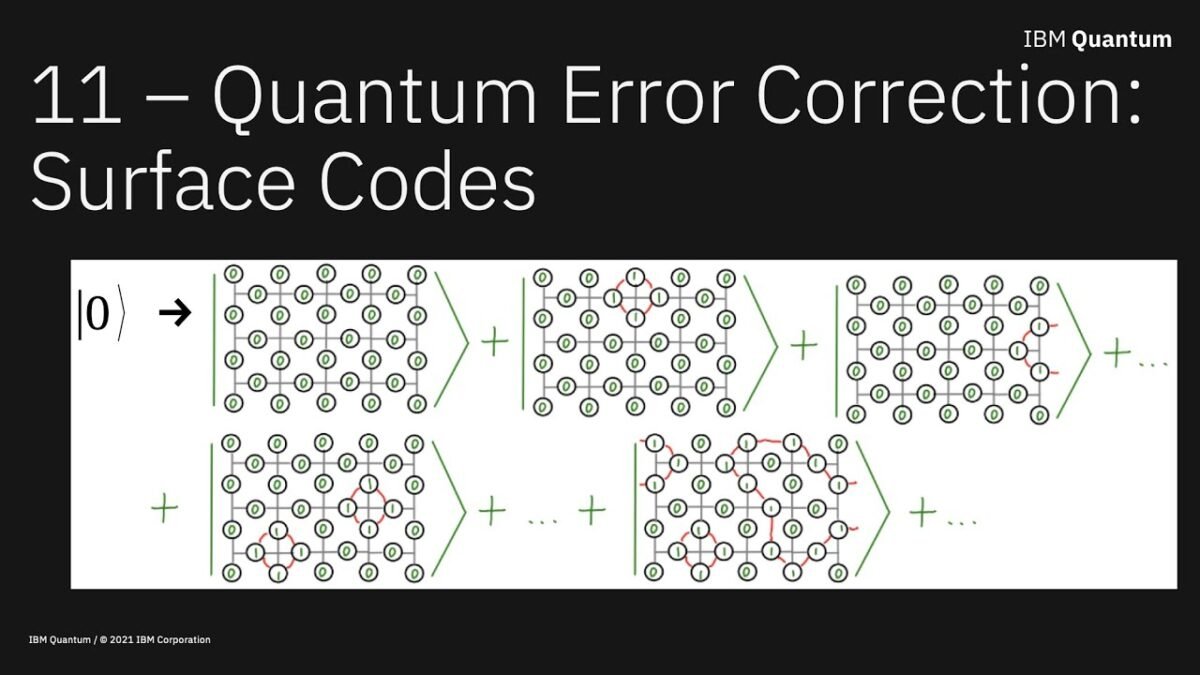
Techniques like randomized benchmarking, gate set tomography, and cycle benchmarking provide the hardware noise fingerprints that inform S-NISQ protocol design. If a platform exhibits predominantly coherent errors (systematic over-rotations, for example), different correction strategies outperform those suited to stochastic depolarizing noise. Biased noise models, where bit-flip errors and phase-flip errors occur at very different rates, allow the use of asymmetric codes like XZZX surface codes that exploit that asymmetry for better effective protection. The sophistication of noise characterization is increasingly what differentiates competitive S-NISQ quantum error correction implementations from those that underperform their theoretical promise.
Software Frameworks Supporting S-NISQ Quantum Error Correction
Hardware advances mean little without software that can express, compile, and execute S-NISQ error correction protocols efficiently. Several open-source and commercial frameworks have emerged to fill this gap, making it possible for researchers and developers to implement and test S-NISQ quantum error correction without building everything from scratch.
IBM’s Qiskit offers a growing quantum error correction module with support for syndrome extraction circuits and decoder integrations. Stim, an open-source stabilizer circuit simulator from Google researcher Craig Gidney, has become the de facto standard for simulating S-NISQ-scale quantum error correcting experiments with speed that makes large-scale Monte Carlo noise simulations practical. Quantinuum’s TKET compiler includes noise-aware circuit optimization passes that are directly relevant to reducing the overhead of S-NISQ implementations. The maturity of these software tools is a significant factor in the acceleration of S-NISQ quantum error correction research, lowering the barrier for hardware teams, academic groups, and quantum software companies to contribute.
What S-NISQ Quantum Error Correction Means for Quantum Applications
The near-term applications that stand to benefit most from S-NISQ quantum error correction are those that require moderate circuit depth and high output fidelity but do not yet need the full power of fault-tolerant universal quantum computation. Variational quantum eigensolvers (VQE) for quantum chemistry, quantum approximate optimization algorithms (QAOA), and quantum machine learning circuits all fall into this category.
“The goal of quantum error correction is not perfection — it is to make quantum computation reliable enough to be useful before perfection is achievable.” — A principle widely articulated in the quantum error correction research community, reflecting the pragmatic philosophy that defines the S-NISQ era.
With S-NISQ quantum error correction suppressing errors, these algorithms can run on deeper circuits with higher confidence, potentially reaching the regime where quantum devices provide advantages over the best classical approaches for specific problem classes. This does not guarantee commercial quantum advantage in the near term, but it meaningfully advances the timeline and narrows the uncertainty around when practical quantum computing applications become viable
Challenges and Open Problems in S-NISQ Error Correction Research
Despite genuine progress, S-NISQ quantum error correction faces several open challenges that the research community is actively working to address. Crosstalk between qubits — unwanted interactions that are difficult to characterize and hard to model — remains a significant source of correlated errors that small, uncorrelated-noise-assuming codes handle poorly.
Scaling the classical control infrastructure to match quantum processor growth is another pressure point. S-NISQ implementations require fast, low-latency classical electronics for syndrome measurement and real-time decoding that must keep pace as qubit counts grow. Additionally, demonstrating that S-NISQ quantum error correction improves performance on application-relevant metrics — not just toy benchmarks — is still an ongoing effort. Bridging the gap between error-rate-focused hardware papers and application-focused performance claims is one of the most important unfinished tasks in the field.
The Road Ahead: From S-NISQ to Early Fault Tolerance
The most optimistic credible roadmap for S-NISQ quantum error correction suggests that by the late 2020s, processors running small error correcting codes with sub-threshold physical error rates could demonstrate genuine logical qubit performance that exceeds physical qubit baselines at useful circuit depths. From there, scaling the number of logical qubits — while maintaining corrected performance — is the path to early fault tolerance.
S-NISQ quantum error correction is not the final destination; it is the proving ground. The codes, decoders, characterization methods, and compiler techniques being developed in this era will directly seed the full fault-tolerant systems that follow. Hardware teams that invest seriously in S-NISQ infrastructure today are building the institutional knowledge, software stacks, and fabrication processes that will define competitive positioning in quantum computing’s next decade.
Conclusion
S-NISQ quantum error correction represents one of the most consequential and carefully engineered transitions in the history of quantum information science. By bridging the space between raw noisy hardware and the distant ideal of perfect fault tolerance, it offers a pragmatic, scalable path that matches the capabilities of processors being built right now.
The progress has been real: from theoretical code constructions to hardware-validated logical qubit demonstrations, the field has moved faster than many predicted just five years ago. The challenges ahead — crosstalk, real-time decoding at scale, application-relevant benchmarks — are genuine, but they are engineering challenges, not fundamental barriers. For researchers, engineers, investors, and enterprises trying to understand where quantum computing is headed, understanding S-NISQ quantum error correction is not optional background knowledge. It is the core of where the field is now, and where it is going next.
FAQs
What error rates are required for S-NISQ quantum error correction to be beneficial?
For S-NISQ quantum error correction to provide a net benefit — meaning the logical error rate is lower than the physical error rate — the physical two-qubit gate error rate generally needs to be below approximately 0.1–0.3% for small codes like [[4,2,2]]. Leading trapped-ion processors are already within this range, while leading superconducting platforms are operating at or near the boundary, making this an active area of hardware engineering focus.
Will S-NISQ quantum error correction eventually replace full fault-tolerant approaches?
No. S-NISQ quantum error correction is a transitional strategy, not a permanent architecture. Full fault-tolerant quantum computing — using large-overhead codes like the surface code to achieve arbitrarily low logical error rates — remains the long-term goal for running quantum algorithms at scale. S-NISQ serves as the critical bridge that generates practical results, hardware data, and engineering know-how during the years before full fault tolerance becomes achievable.
What software tools are available for implementing S-NISQ error correction experiments?
The most widely used tools include IBM’s Qiskit with its error correction extensions, Google’s Stim simulator for fast stabilizer circuit simulation, and Quantinuum’s TKET compiler for noise-aware circuit optimization. These open-source and commercial frameworks have substantially lowered the barrier to entry for researchers exploring S-NISQ quantum error correction, enabling rapid iteration between theoretical protocol design and hardware-validated experiments.