



Mood Examples: 25+ Ways Writers Create Atmosphere (With Real Examples)
Mood Examples: Every piece of writing carries a feeling, even before you notice the words doing the work. That feeling is mood, and learning to recognize it changes how you read and how you write. This guide walks through clear mood examples from fiction, poetry, and everyday language, while also untangling the confusing relationship between tone and mood, and explaining where grammatical mood fits into the picture.
Whether you’re a student preparing for an English exam, a novelist polishing a scene, or a content writer trying to set the right emotional register, understanding mood examples gives you a practical toolkit. By the end of this article, you’ll be able to spot mood in any passage, build it intentionally in your own writing, and explain the difference between tone and mood with confidence.
What Is Mood in Writing and Why It Matters
Mood is the emotional atmosphere a piece of writing creates in the reader. It’s the feeling that settles over you as you read — tension, calm, dread, joy, nostalgia — and it’s shaped by word choice, sentence rhythm, setting, and pacing working together. Strong mood examples don’t announce themselves; they build quietly through details the reader absorbs without consciously analyzing.
Writers reach for mood because it does emotional work that plot and dialogue alone cannot accomplish. A scene can be factually tense (a character is in danger) without feeling tense, and the gap between those two things is almost always a failure to control mood. When you study mood examples closely, you start noticing how skilled authors layer sensory detail, pacing, and word connotation to make a reader feel something specific before they’ve even processed what’s happening in the plot.
Tone vs Mood Examples: Spotting the Difference
One of the most common points of confusion in writing classes is the line between tone and mood, so looking at tone vs mood examples side by side is the fastest way to understand it. Tone is the author’s or narrator’s attitude toward the subject matter — sarcastic, sincere, mocking, respectful. Mood, on the other hand, is the feeling the reader experiences while reading. A writer can maintain a light, joking tone while still creating an unsettling mood, which is exactly why these two concepts get mixed up so often.
Consider a short scene where a narrator describes a dark house with dry humor: “The floorboards groaned like they hadn’t decided whether to hold my weight, which felt like a fair concern given my life choices.” The tone here is wry and self-deprecating, but the mood can still be eerie because of the setting details. Reviewing tone vs mood examples like this one shows that tone comes from the writer’s voice, while mood comes from the reader’s emotional response to the scene as a whole — two separate layers operating at once.
Common Mood Examples Across Everyday Writing
Mood examples aren’t limited to novels and poetry; they show up constantly in everyday writing, from emails to advertising copy to social media captions. A wedding invitation uses soft, celebratory language to create a joyful mood. A safety warning label uses blunt, urgent phrasing to create an alarmed mood. Even a grocery list can carry mood if it’s scrawled hastily versus typed neatly with categories — the format itself signals something about urgency or calm.
In marketing and brand writing, mood examples are deliberately engineered to influence buying decisions. A luxury skincare brand might use slow, sensory language (“a quiet ritual, a moment reclaimed”) to build a relaxed, indulgent mood, while a fitness brand might use short, punchy sentences (“Push harder. No excuses. Today counts.”) to build an energized, motivated mood. Recognizing these patterns in everyday writing trains your eye to notice mood-building techniques you can later apply to your own work, regardless of genre.
Mood Examples in Literature That Shaped Reading Experiences
Some of the most memorable mood examples in literature come from passages where setting and atmosphere do as much storytelling as the plot itself. Edgar Allan Poe built an entire career on dread-soaked mood, using decaying houses, flickering candlelight, and obsessive narrators to create claustrophobic tension. Charlotte Brontë’s opening chapters of “Jane Eyre” use cold weather, locked rooms, and isolation to establish a mood of loneliness before a single major plot event occurs.
Studying mood examples in literature also reveals how mood can shift within a single work to mirror a character’s internal state. In “The Great Gatsby,” F. Scott Fitzgerald shifts from glittering, intoxicating party scenes to hollow, melancholic quiet once the parties end, and that contrast in mood reinforces the novel’s themes about emptiness behind glamour. These mood examples in literature matter because they show mood isn’t decorative — it’s structural, guiding readers toward the emotional truth of a story even when the plot summary alone wouldn’t reveal it.
How Word Choice Creates Mood Examples
Connotation, not just denotation, is the engine behind most mood examples. Two words can describe the same object yet produce wildly different feelings: “cottage” versus “shack,” “slender” versus “skinny,” “ancient” versus “decrepit.” Writers building mood scan their sentences for words carrying unwanted connotations that clash with the atmosphere they’re trying to create, swapping neutral or mismatched words for ones that reinforce the intended feeling.
Sentence length and rhythm matter just as much as vocabulary when constructing mood examples. Short, fragmented sentences tend to create anxious or urgent moods, mimicking the way panic interrupts clear thought. Long, flowing sentences with multiple clauses tend to create calm, reflective, or dreamy moods, giving the reader’s mind room to settle into the scene. Combining careful word choice with intentional sentence rhythm is how experienced writers turn a flat paragraph into one of the more effective mood examples a reader will remember.
Imperative Mood Examples and Grammatical Mood Explained
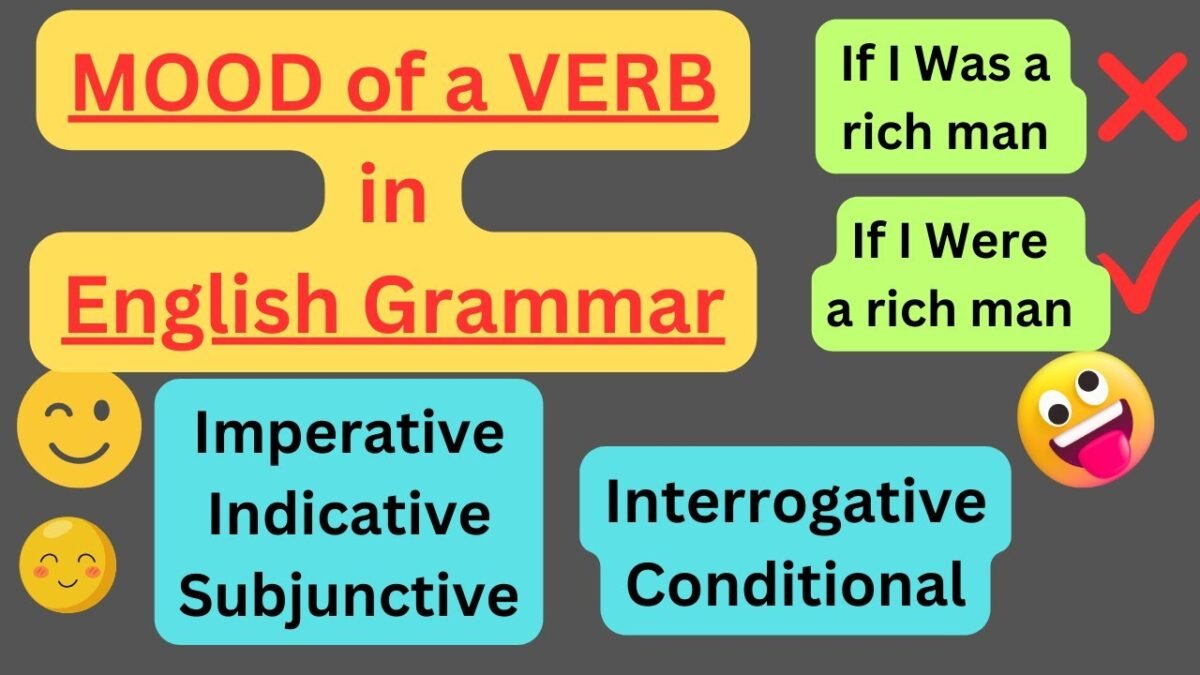
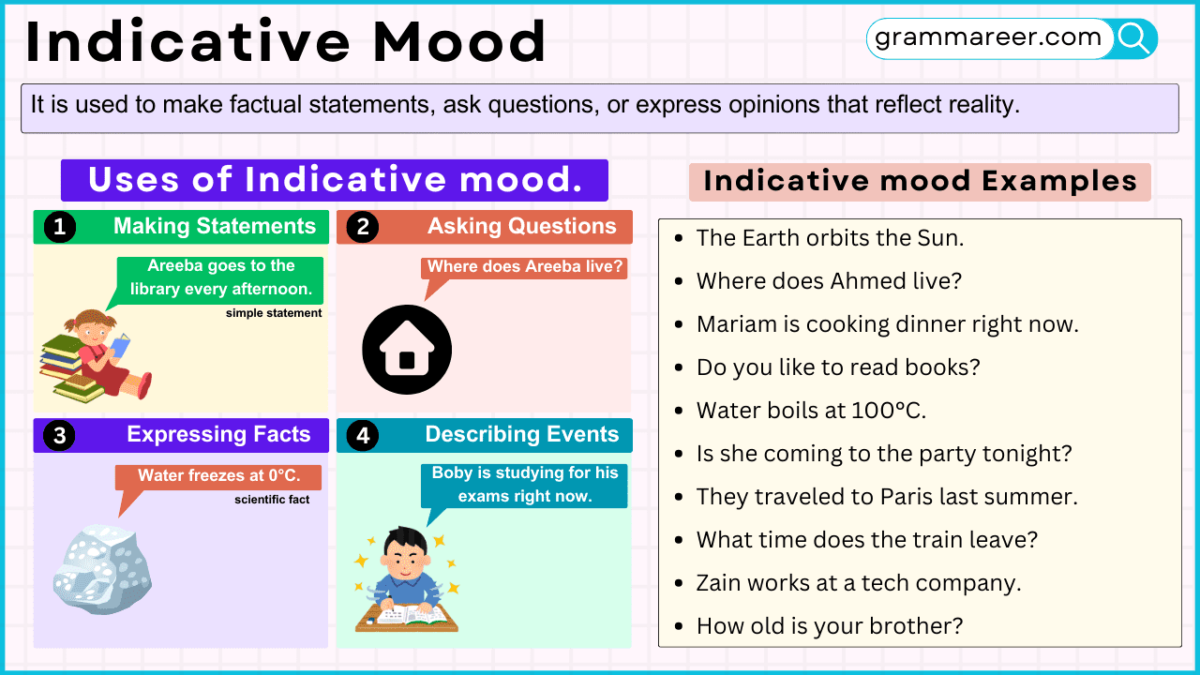
While literary mood deals with atmosphere, grammatical mood is a completely different concept rooted in verb form, and imperative mood examples are the easiest entry point for understanding it. Grammatical mood refers to how a verb expresses fact, possibility, command, or wish — the main types being indicative, subjunctive, and imperative. Imperative mood examples include direct commands like “Close the door,” “Pass the salt,” or “Finish your homework,” where the verb instructs rather than states or questions.
The subjunctive mood, by contrast, expresses wishes, hypotheticals, or conditions that aren’t necessarily true, as in “If I were taller” or “I suggest that she leave early.” Understanding imperative mood examples alongside subjunctive and indicative forms helps writers and language learners use verbs more precisely, especially in formal writing where mood errors (“If I was you” instead of “If I were you”) are common giveaways of imprecise grammar. Even though grammatical mood and literary mood share a name, recognizing both meanings prevents confusion when the word “mood” appears in a writing or grammar lesson.
Mood Examples in Poetry and Descriptive Writing
Poetry compresses language so tightly that mood examples often emerge from a single striking image or sound pattern rather than extended description. Edgar Allan Poe’s “The Raven” uses repetitive, droning rhyme (“Nevermore”) to build a mood of inescapable grief and obsession, with the sound of the poem reinforcing its emotional weight. Sylvia Plath’s later poems frequently use sharp, visceral imagery — blood, bone, ash — to create moods of rawness and barely contained pain.
Descriptive prose borrows many of poetry’s techniques when building mood, particularly sensory layering across sight, sound, smell, and touch within a short space. A passage describing rain might mention the metallic smell before a storm, the gray flattening of the sky, and the hollow drum of water on a tin roof, stacking sensory details until the reader feels the mood physically rather than just reading about it intellectually. These compressed, image-driven mood examples demonstrate that you don’t need pages of description to establish atmosphere — sometimes three well-chosen sensory details outperform a full paragraph of generic scene-setting.
A Breakdown Table of Mood Examples by Genre
Different genres tend to favor distinct moods because those moods support reader expectations and genre conventions. The table below breaks down common mood examples by genre, along with the techniques writers typically use to achieve them.
| Genre | Typical Mood | Common Techniques |
|---|---|---|
| Horror | Dread, unease, claustrophobia | Short sentences, sensory ambiguity, isolation, dim lighting imagery |
| Romance | Warmth, longing, intimacy | Soft sensory detail, slower pacing, focus on physical closeness |
| Mystery/Thriller | Suspense, paranoia | Withheld information, ticking-clock pacing, unreliable narration |
| Literary Fiction | Melancholy, reflection, nostalgia | Long flowing sentences, memory-based imagery, quiet settings |
| Comedy | Lightness, absurdity, joy | Quick pacing, exaggeration, playful word choice |
| Fantasy/Adventure | Wonder, awe, urgency | Vivid world-building detail, scale-driven imagery, momentum |
This table makes clear that mood examples are rarely random; they’re chosen deliberately to match genre expectations and reader emotional needs. A horror novel that accidentally reads as cozy has usually mismatched its techniques to its intended genre mood, while a romance that feels cold has often leaned on clinical language instead of warm, sensory detail.
How Writers Use Setting to Build Mood Examples
Setting is one of the most powerful and underused tools for creating mood, because physical environments carry built-in emotional associations readers already understand. A storm outside a window signals turmoil before a character says a word. A sunlit kitchen with the smell of fresh bread signals safety and comfort almost instantly. Writers exploit these shared associations to create mood examples quickly, without needing pages of internal monologue to explain how a character feels.
As novelist and essayist Joan Didion once observed, “I write entirely to find out what I’m thinking,” and that same instinct applies to setting-driven mood — writers often discover the emotional truth of a scene by describing where it happens rather than explaining what a character feels outright. Weather, lighting, architecture, and even background noise all function as mood-building tools, letting the environment itself carry emotional weight that dialogue and action alone might leave flat. This is why so many memorable mood examples in fiction begin with a paragraph of setting before any character speaks.
Common Mistakes When Using Mood Examples
One of the most frequent mistakes writers make is overloading a scene with adjectives instead of trusting concrete, specific detail to create mood naturally. Piling on words like “eerie,” “terrifying,” or “beautiful” tells the reader how to feel rather than showing them something that produces that feeling organically. Strong mood examples almost always favor specific, sensory nouns and verbs over vague emotional labels, because specificity does the persuasive work that adjectives only attempt.
Another common error is mismatching mood with pacing — describing a tense chase scene in long, leisurely sentences, or a quiet, contemplative moment in short, choppy fragments. Mood and rhythm need to align, because a reader’s nervous system responds to sentence structure almost as much as to content. Reviewing your own writing for these mismatches, and comparing your drafts against strong mood examples from authors you admire, is one of the fastest ways to sharpen your control over atmosphere.
Conclusion
Mood is one of the most powerful yet least discussed tools available to any writer, shaping how readers feel before they consciously register why. Across this guide, mood examples from literature, poetry, grammar, and everyday writing have shown that atmosphere is built deliberately, through word choice, sentence rhythm, setting, and sensory detail working in concert. Understanding tone vs mood examples clarifies that attitude and atmosphere are related but distinct, while imperative mood examples remind us that the word “mood” carries a separate grammatical meaning worth knowing on its own terms.
The next time you sit down to write — or to analyze a passage for class or pleasure — try identifying the mood first, then trace backward to find the specific techniques creating it. That habit, practiced consistently, turns mood from an abstract literary term into a concrete, usable skill, and it’s one of the most reliable ways to elevate flat writing into something readers genuinely feel.
FAQs
What is the easiest way to identify mood in a passage?
Ask yourself what emotion you felt while reading, then look back at the specific words, setting details, and sentence rhythms that produced that feeling; this reverse-engineering approach works well across most mood examples, regardless of genre.
How is tone different from mood in writing?
Tone reflects the writer’s or narrator’s attitude toward the subject, while mood is the emotional atmosphere the reader experiences; comparing tone vs mood examples side by side is the clearest way to internalize this distinction.
Can a single piece of writing contain multiple moods?
Yes, mood often shifts throughout a longer work to mirror plot developments or character growth, and noticing these shifts is one of the more advanced skills gained from studying mood examples in literature closely.
What is imperative mood in grammar, separate from literary mood?
Imperative mood is a grammatical verb form used for commands, requests, or instructions, and imperative mood examples like “Sit down” or “Please wait here” have nothing to do with emotional atmosphere despite sharing the word “mood.”
Why do writers use setting to create mood instead of stating emotions directly?
Setting taps into associations readers already hold, allowing environment-driven mood examples to feel earned and immersive rather than told, which generally produces a stronger emotional response than directly naming a character’s feelings.
Are mood examples more common in fiction than nonfiction?
While fiction relies heavily on mood for storytelling, nonfiction genres like memoir, travel writing, and even persuasive essays use mood examples too, often through descriptive scene-setting or carefully chosen emotional language.