




Octordle Daily: Today’s Hints, Strategy & How to Win (2026 Guide)
Octordle Daily: If Wordle felt easy and you went looking for something tougher, you probably landed on the daily Octordle puzzle. Instead of guessing one five-letter word, you are juggling eight at once, all updating in real time as you type. It is chaotic in the best possible way, and once it clicks, it becomes genuinely addictive.
This guide breaks down exactly how this puzzle works, the smartest ways to approach your guesses, and how to use hints without spoiling the fun completely. Whether you are brand new to the game or you play every single morning with your coffee, there is something here to sharpen your approach. We will look at why the format has become so popular among word-game fans who have already grown bored with simpler one-word puzzles, and what separates a casual player from someone who consistently finishes with guesses to spare.
We will also cover where this puzzle fits among its sibling game modes, what makes a strong opening word, and how to read the color clues quickly enough to keep up with eight grids at once. By the end, you should feel a lot more confident tackling today’s puzzle, and you will have a clearer sense of which strategies are worth building into a daily habit versus which ones are better saved for days when you are feeling especially stuck.
What Exactly Is Octordle Daily
This puzzle is the flagship mode of the Octordle word game, where players try to solve eight different five-letter words within thirteen total guesses. Every guess you type gets checked against all eight hidden words simultaneously, so a single entry can light up clues across every grid on the board at once. The game was created by Kenneth Crawford as a more extreme spinoff of Wordle, following in the footsteps of two-word Dordle and four-word Quordle, and it has since become one of the most recognizable entries in the broader wave of word-guessing games that followed Wordle’s initial viral success.
A fresh puzzle drops once every day, and it is the same puzzle for every player around the world, which is part of why so many people compare notes and screenshots with friends. The color system mirrors Wordle closely: green means a letter is correct and in the right spot, yellow means it appears somewhere else in that word, and gray means it is not in that word at all. With eight boards lighting up independently, the early guesses in this puzzle matter enormously, since they generate the foundation of clues you will lean on for the rest of the round, and a single careless early guess can end up costing far more than it would in a simpler one-word format.
How the Octordle Today Puzzle Actually Works
Each time you check octordle today, you are looking at eight separate grids stacked or tiled on the screen, each one tracking its own hidden word independently. Typing a guess sends that same five-letter word into every single grid at once, and each board reacts based on whether those letters appear in its own hidden answer. This is very different from playing eight separate games of Wordle back to back, since here your guesses are shared across all boards simultaneously, which is exactly what makes the format so demanding. Even experienced word-game players sometimes underestimate just how much mental tracking this requires until they sit down and actually try it for the first time.
Once a board’s word is fully solved, it locks in and displays a checkmark, leaving you with fewer active grids to track for the remainder of your guesses. This shrinking-board effect is satisfying, but it also means your strategy needs to shift as the round progresses. Early guesses should prioritize broad letter coverage across the entire alphabet, while later guesses can become far more targeted once several of the eight words have already been solved, and many players find that the last two or three boards are actually the trickiest part of the entire round simply because the remaining guesses feel so much more precious by that point.
Octordle Hint Strategies That Actually Help
A good octordle hint does not need to hand you the answer outright; sometimes the most useful nudge is just a reminder of which letters you have not tried yet. Many players keep a mental or physical checklist of letters used across all eight boards, since with so many grids active, it is easy to forget that a common letter like E or R has already been ruled out somewhere. Treating each octordle hint as a small piece of a larger puzzle, rather than a shortcut, tends to keep the game enjoyable instead of turning it into pure answer-lookup, and it also builds the kind of pattern recognition that makes future puzzles easier to solve without any outside help at all.
Another effective hint-style approach is paying attention to word patterns that repeat across days, since certain five-letter combinations show up more often simply because they are common in the English language. If you are stuck on one particular grid while the rest of the board is solved, scanning for likely vowel placement based on the green and yellow letters you already have is often more productive than guessing randomly. The goal of any solid octordle hint strategy is to narrow the possibilities methodically rather than burning through your limited guesses on long shots, and a single well-placed hint at the right moment can often save an entire wasted attempt later in the round.
Choosing the Best Starting Words for This Puzzle
Your opening guesses in octordle daily carry more weight than in almost any other word game, simply because you are gathering information for eight boards instead of one. A strong starting strategy usually involves picking two or three words that together cover as many different letters as possible, with a heavy emphasis on common vowels and frequently used consonants like S, T, R, and N. Words like CRANE, SLATE, or ADIEU are popular openers because they balance vowel coverage with commonly occurring consonants, and some players even rotate between two or three favorite openers depending on how the first guess’s results play out.
Avoiding repeated letters in your first few guesses is also smart, since repeating a letter you have already tested wastes a guess that could be revealing brand-new information instead. Many experienced players run the same two or three opening words every single day regardless of the actual puzzle, treating those guesses as a fixed information-gathering ritual before they start solving individual boards. This kind of consistency builds intuition over time, making it easier to recognize useful letter patterns the moment they appear on the grid, and it also removes a layer of decision fatigue that can otherwise slow down the opening minute or two of play.
Octordle Answer Today Versus Looking It Up Yourself
There is a real difference between checking the octordle answer today out of genuine difficulty and using it as a daily shortcut that skips the challenge entirely. Plenty of word-game fans treat the puzzle as a quick five-minute brain warmup, and there is nothing wrong with peeking at a hint site occasionally when a particular grid has you completely stuck. That said, players who consistently look up the octordle answer today before even attempting the puzzle tend to lose the sense of accomplishment that makes these games satisfying in the first place, and over weeks or months, that habit can quietly take the fun out of something that used to feel rewarding.
A healthier middle ground is using partial hints, like a single letter clue or a category nudge, rather than the full solved word. This keeps the mental workout intact while still helping you avoid the frustration of staring at a grid with no progress for several minutes. If you do choose to check answers occasionally, doing so only after a genuine attempt tends to preserve more of the long-term enjoyment and skill-building the game offers, and it also means you walk away from each session feeling like you actually earned the win rather than borrowed it.
Today’s Octordle Versus Other Game Modes
The table below breaks down how the standard daily mode compares to some of Octordle’s most popular variants, which can help clarify which mode fits your mood and skill level on any given day.
| Game Mode | Guesses Allowed | Key Difference |
|---|---|---|
| Daily Octordle | 13 guesses | Standard mode, all eight boards visible and solvable in any order |
| Daily Sequence | 15 guesses | Words must be solved one at a time in a fixed order, only one board visible at once |
| Daily Rescue | 9 guesses | The game auto-fills your first four starting guesses for you |
| Daily Gold | 13 guesses | Premium mode with exclusive starter word options and ad-free play |
| Challenge Mode | Varies | Themed word sets, such as countries, colors, or city names |
Comparing these modes side by side shows why octordle daily remains the most popular entry point for new players, since it offers the freedom to tackle boards in any order without the added time pressure of a fixed sequence. More experienced players often branch out into Sequence or Challenge modes once they feel confident managing eight boards under the standard daily format, and some even alternate between modes depending on how much time they have available on a given morning.
Reading the Color Clues Quickly Across Eight Boards
Speed matters in Octordle, and the players who solve fastest are usually the ones who have trained themselves to scan color clues efficiently rather than studying each board individually after every guess. A green letter locks in its position immediately, so the smartest move is glancing at all eight boards in a quick sweep rather than fixating on just one grid at a time. Building this habit early prevents the common mistake of losing track of a near-solved board simply because attention got pulled elsewhere, and it also makes the overall pace of the round feel far less overwhelming once it becomes second nature.
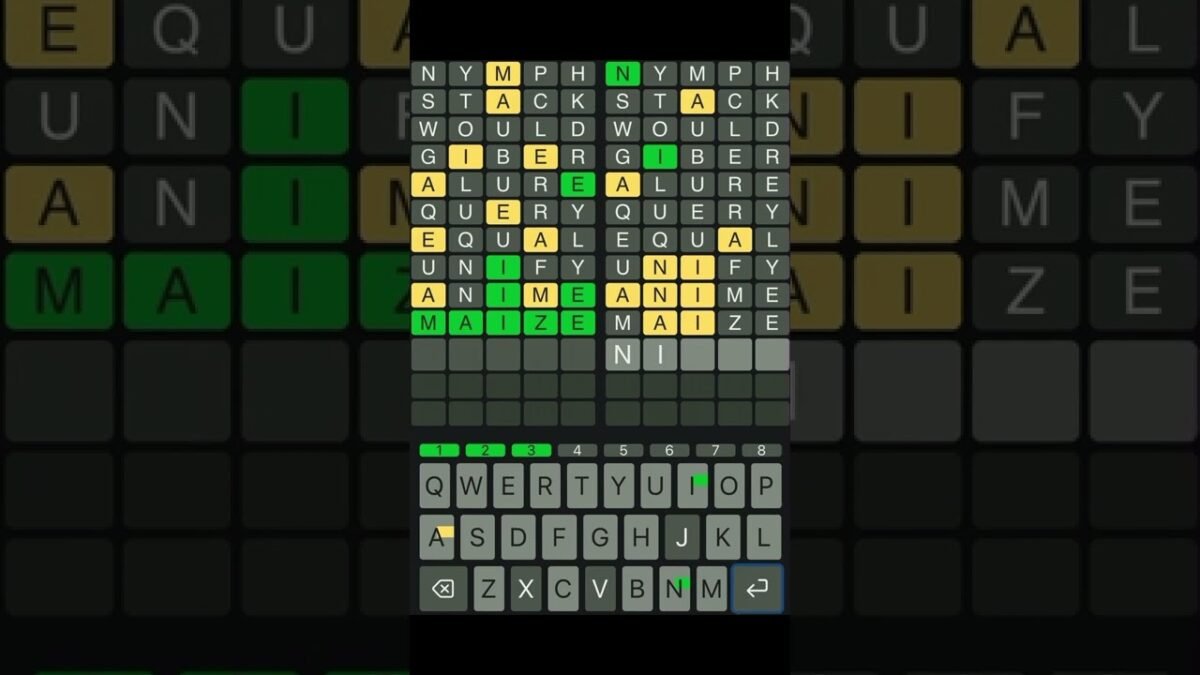
Yellow letters require a bit more mental bookkeeping, since they confirm a letter belongs in the word without confirming its position. Keeping a rough mental note of which yellow letters have appeared on which boards, even loosely, makes it much easier to test smarter placements on your next few guesses. Over time, this scanning habit becomes almost automatic, and that is usually the point where a player’s average solve time drops noticeably, often dropping from well over ten minutes down to just a handful once the eight-board layout stops feeling unfamiliar.
Common Mistakes That Slow Down Octordle Solvers
One of the most frequent mistakes new players make is treating each of the eight boards as a separate puzzle rather than a connected information source. A letter ruled out on one board is still useful information overall, since it confirms that letter is not part of that specific hidden word, which can help eliminate guesses on other boards too if patterns start to overlap. Ignoring this connected nature of the game often leads to wasted guesses that repeat information you technically already had, and that single oversight is probably responsible for more failed rounds than any actual vocabulary gap.
Another common slip-up is rushing into guesses without scanning the full board first. With eight grids demanding attention, it is tempting to guess quickly just to keep things moving, but a few extra seconds of careful review before typing can save an entire guess later in the round. Players who slow down slightly during the middle stretch of the puzzle, once a few boards are solved and pressure starts building on the rest, tend to finish with guesses to spare rather than scrambling at the thirteenth attempt, which is usually the difference between a comfortable win and a nail-biting finish.
Why Octordle Has Built Such a Loyal Daily Audience
Part of Octordle’s appeal comes from the same psychological pull that made Wordle a viral hit: a single, shared daily puzzle that everyone is solving at the same time creates a sense of communal challenge. Sharing results, comparing guess counts, and discussing tricky words with friends or family adds a social layer that elevates the game beyond just solo brain training. As one puzzle enthusiast put it in a gaming forum discussion, “the fun isn’t really finishing it, it’s bragging about how few guesses it took.”
The daily format also taps into habit-forming behavior in a healthy way, similar to other quick daily rituals like checking the weather or reading the news. Because a new Octordle releases only once every twenty-four hours, there is no temptation to binge multiple rounds back to back, which keeps the experience feeling fresh rather than exhausting. This scarcity, combined with genuinely challenging gameplay, has helped Octordle carve out a loyal niche among players who have already mastered simpler word games.
Playing Octordle Daily on Mobile Versus Desktop
Many players assume the experience is identical regardless of device, but screen size genuinely changes how manageable eight simultaneous boards feel. On a desktop or tablet, all eight grids are usually visible at once without much scrolling, which makes the quick-scan approach to color clues far easier to execute. On a smaller phone screen, some layouts compress the boards or require scrolling, which can slow down that same scanning habit if you are not used to navigating the interface.
Adjusting your strategy slightly for mobile play, such as pausing briefly after each guess to scroll through every board methodically rather than relying on peripheral vision, can prevent missed clues that are easy to catch on a larger screen. Some dedicated players keep a small notebook or notes app open alongside the game on mobile specifically to offset the reduced visibility, jotting down confirmed letters as they go. Regardless of device, the core mechanics behind this puzzle remain exactly the same, so the adjustment is really about workflow rather than strategy.
Building a Daily Habit Without Burning Out
Treating this puzzle as a quick daily ritual rather than a competitive obligation tends to keep the experience enjoyable over the long run. Some players fall into the trap of feeling pressure to maintain a perfect streak, which can turn what used to be a relaxing few minutes into a source of stress, especially on days when the puzzle happens to be unusually difficult. Giving yourself permission to occasionally use a hint, or even skip a day entirely without guilt, tends to protect the habit far better than rigid perfectionism does.
Setting a rough time limit for each session, such as five or ten minutes, can also help prevent the kind of frustrated over-guessing that happens when a single stubborn board refuses to cooperate. If a particular grid is eating up far more time than the rest of the board combined, stepping away briefly and coming back with fresh eyes often reveals a pattern that was hiding in plain sight. Building this daily ritual into your morning or evening routine works best when it stays a source of light mental engagement rather than another task competing for your patience.
Conclusion
This puzzle rewards patience, pattern recognition, and a willingness to treat your guesses as shared information rather than isolated attempts. The eight-board format feels overwhelming at first, but with the right opening strategy and a disciplined approach to scanning color clues, most players find their solve times improving significantly within just a week or two of regular practice.
Whether you rely on an occasional octordle hint, study the octordle answer today out of curiosity after finishing, or prefer to solve everything cold, the most important thing is that the daily ritual stays enjoyable. Octordle today is just one puzzle among many, but for a growing community of word-game fans, it has become a small, satisfying piece of the daily routine worth showing up for.
FAQs
How many guesses do I get in Octordle daily?
Octordle daily gives players thirteen total guesses to solve all eight hidden five-letter words. Each guess is checked against every board simultaneously, so the words you choose early on directly affect how much useful information you have heading into the later rounds.
What is a good first word to use in Octordle daily?
Strong opening words tend to maximize vowel and common consonant coverage, since you are gathering clues for eight different boards rather than just one. Many regular players in octordle daily use the same two or three starting words every day specifically because consistency builds faster pattern recognition over time.
Is Octordle today the same puzzle for everyone?
Yes, octordle today refers to the same shared daily puzzle that every player around the world receives, similar to how Wordle works. This shared format is part of what makes comparing results and guess counts with friends so popular.
Where can I find an octordle hint if I’m stuck?
Several puzzle and gaming sites publish a daily octordle hint that offers partial clues, like a category nudge or a single confirmed letter, without giving away the full solution. Using a hint sparingly, only after a genuine attempt, tends to preserve more of the challenge and satisfaction of solving Octordle daily on your own.
Should I look up the octordle answer today before playing?
Checking the octordle answer today before attempting the puzzle removes most of the challenge and tends to reduce long-term enjoyment for regular players. It is generally more rewarding to attempt the puzzle fully first and only check answers afterward out of curiosity or when truly stuck.
How is Octordle daily different from the Sequence mode?
Octordle daily lets you solve all eight boards in any order you choose, while Sequence mode locks you into solving one word at a time before the next board becomes visible. Sequence mode also grants slightly more guesses to compensate for this added structural difficulty.